Why Organisational Transformations So Often Disappoint
Most organisational transformations don’t fail because the ambition was wrong or the strategy was naive. In our experience, they fall short because leaders underestimate how difficult it is to change what happens when pressure is on, trade-offs need to be made, and long-standing habits slowly reassert themselves.
A statistic that gets quoted often is that around 70% of transformation programs fail to deliver their intended outcomes. It’s a confronting number, but it’s also a blunt one. What it doesn’t capture is how many organisations technically complete a transformation while privately acknowledging that very little has changed in how decisions are made, how people work together, or how leadership shows up when it really matters.
By the time we’re invited into these conversations, the signs are usually there; the team’s energy has dipped, progress feels harder than it should, leaders are still talking about change, but everything feels strangely familiar.
Where Change Starts to Unravel
Most transformation programs are well designed on paper; the operating model has been thought through, the milestones are sensible, and the governance is in place. However, something starts to fray once the work moves from design into day-to-day execution.
We find it’s rarely effort that’s missing, rather it’s alignment at a deeper level.
Senior leaders may agree on the destination but interpret the journey differently. Middle leaders are asked to translate new expectations without enough authority or support. Teams sense that some behaviours are encouraged in theory but subtly avoided in practice. Over time, people tend to adjust – not in open resistance, but in small, reasonable ways that slowly pull the organisation back towards what feels safer and more familiar.
This is where many transformations lose their traction – through erosion.
Frameworks Don’t Change Behaviour
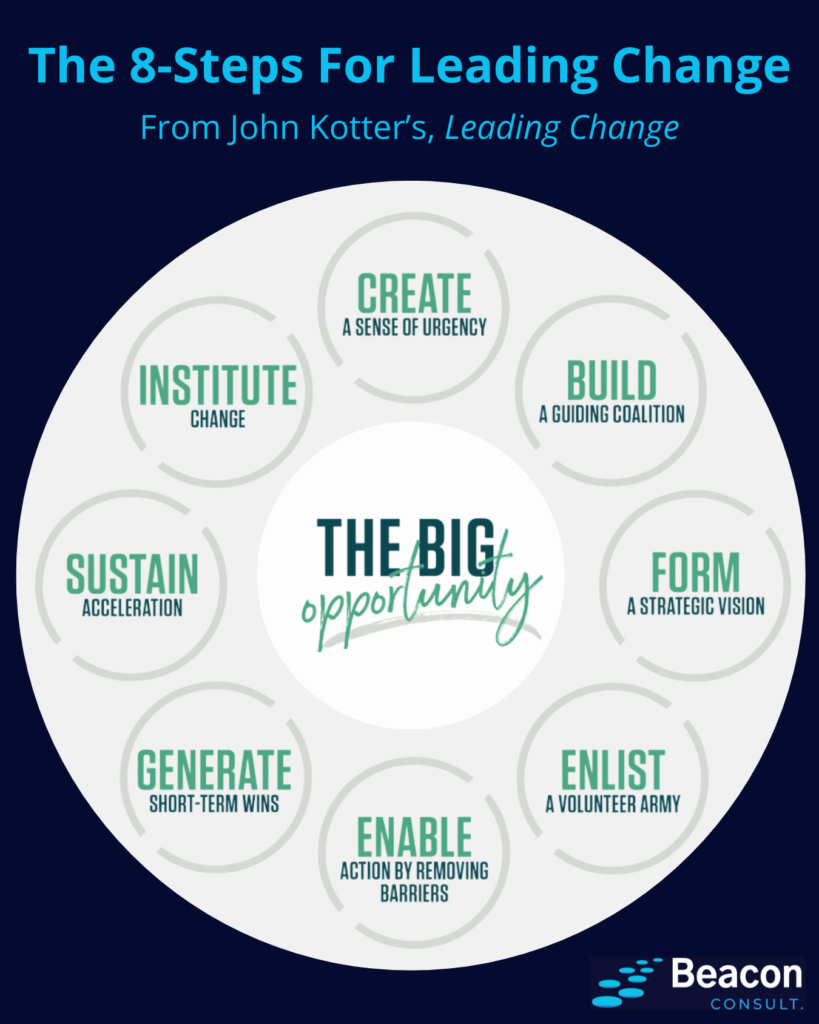
There is no shortage of well-established change frameworks, and many organisations draw on them with good intent. John Kotter’s work, for example, remains influential for a reason. The principles are sound. Creating urgency matters. Leadership alignment matters. Removing barriers matters. Embedding change into culture matters.
What gets lost is that frameworks describe conditions for change; they don’t create them.
We see organisations move quickly to adopt the language of transformation, while skipping the harder work of examining how power operates, how challenge is handled, and which behaviours are genuinely rewarded. When these questions are left unanswered, even the most carefully structured program struggles to take hold.

The Human System Is the System
Transformation lives or dies in the human system of the organisation. That system includes trust, energy, confidence, and the unspoken rules about who gets heard and who doesn’t.
When pressure rises, leaders default to their habits. When risk appears, teams look for cues about what is truly acceptable. When accountability is unclear, decisions slow and frustration builds. These patterns aren’t fixed by new structures or clearer dashboards. They move only when leadership behaviour changes in a consistent, visible way.
This is why culture is the mechanism through which change either embeds or gradually unravels.
What We See Work in Practice
Organisations that navigate transformation well tend to do a few things differently, often without making a lot of noise about it.
They spend time early understanding how decisions are currently made, not how they are supposed to be made. They test leadership alignment in real scenarios, not just in workshops. They pay attention to the emotional and cognitive load being placed on leaders and teams, rather than assuming resilience will just adjust.
Importantly, leaders model the change before it is fully formed. They adjust how meetings run, how disagreement is handled, how feedback is given, and how trade-offs are explained. These everyday signals do more to anchor change than any formal communication plan.
Organisational Transformation as Capability
The organisations that ultimately benefit from transformation treat it as a capability to build rather than a program to complete. They invest in leadership development, coaching, and advisory support that strengthens judgement, confidence, and alignment over time. They accept that change is iterative, and that progress often comes from staying with the tough parts rather than rushing past them.
At Beacon Consult, this is the work we do alongside leaders, teams, and boards – we help strengthen the conditions that allow change to hold under real-world pressure.